
Is Your Pet Acting Out? A Guide to Common Behavioral Challenges
Why Pet Behavioral Issues Are More Common Than You Think

Pet behavioral issues are one of the most frustrating challenges pet owners face — but they're also one of the most misunderstood.
Here's a quick overview of the most common pet behavior problems and what typically causes them:
| Behavior Problem | Common Cause |
|---|---|
| Destructive chewing | Boredom, anxiety, teething |
| Aggression | Fear, pain, genetics, past learning |
| Inappropriate elimination | Medical issues, stress, litter aversion |
| Excessive barking | Anxiety, boredom, territorial instincts |
| Separation anxiety | Attachment, stress, lack of routine |
| Scratching furniture | Natural marking behavior, stress |
| House soiling | Medical conditions, incomplete training |
Most of the time, a pet isn't "acting bad" on purpose. Behavior is communication. When a dog chews your couch or a cat stops using the litter box, they're telling you something is wrong — physically, emotionally, or environmentally.
The challenge is figuring out what they're trying to say.
This guide will help you do exactly that — whether you're dealing with a anxious pup in your Hollywood, FL home or a cat who's decided your sofa is a scratching post.
I'm Max Shemesh, CEO and founder of Aventus8, and through my work in the hemp and natural wellness space, I've seen how pet behavioral issues can be linked to underlying stress and anxiety that natural solutions can help address. Let's walk through everything you need to know to understand and support your pet's behavior.
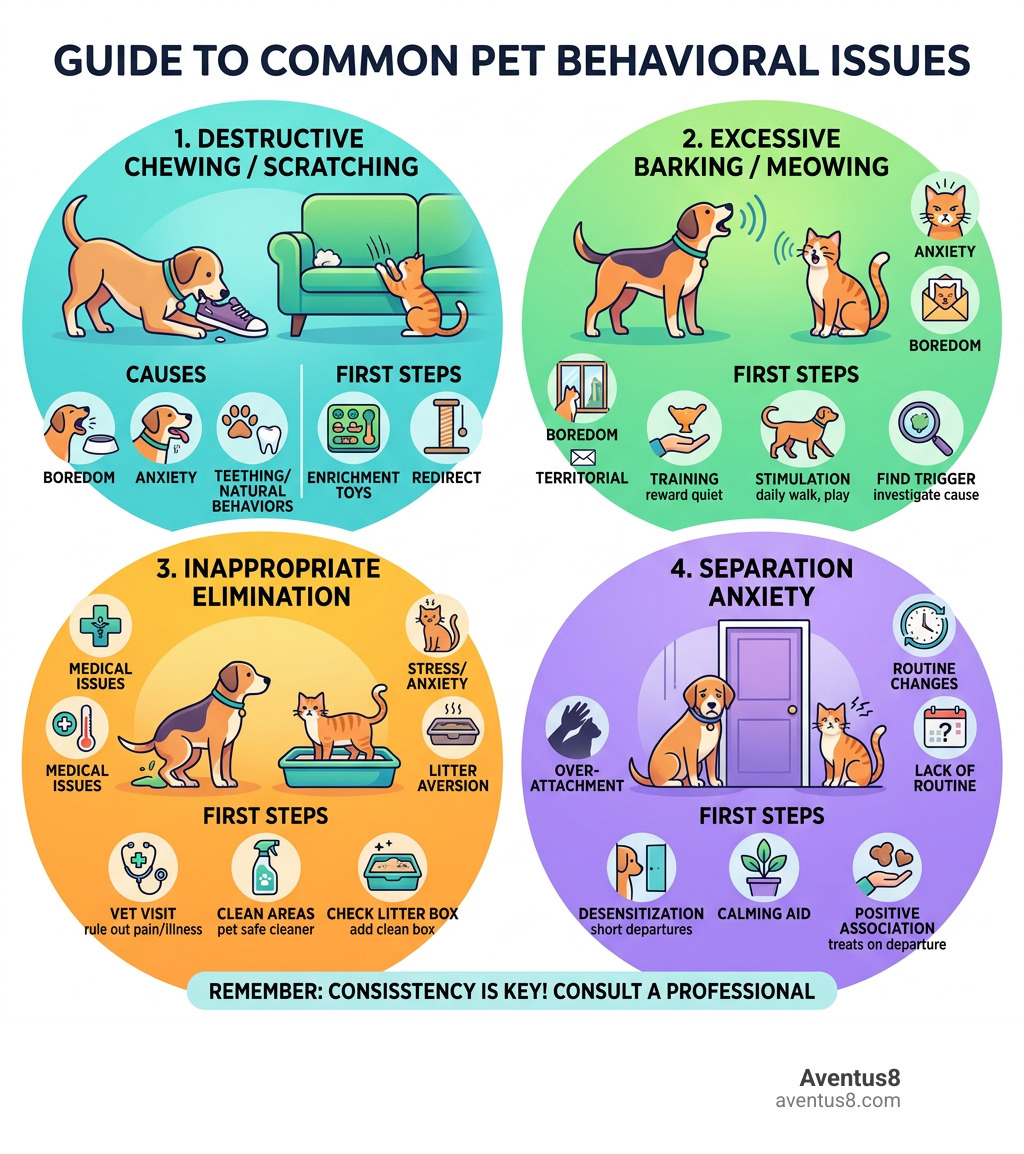
Simple Pet behavioral issues glossary:
Identifying Common Pet Behavioral Issues in Dogs and Cats
Living in a vibrant place like Hollywood, Florida, means our pets are exposed to a lot—salty air, bustling boardwalks, and the occasional tropical thunderstorm. While these environments are exciting, they can also lead to various pet behavioral issues. Understanding these problems is the first step toward a happier household.

In dogs, common issues often include excessive barking, destructive chewing, and mounting. Many of these behaviors are actually normal dog activities that become "problems" when they happen in our living rooms. For instance, mouthing and nipping are how puppies explore the world, but if they carry that into adulthood, it becomes a safety concern.
Cats, on the other hand, often struggle with inappropriate scratching or eliminating outside the litter box. These aren't acts of spite; they are often reactions to environmental changes or health problems. Whether it's a dog digging up your Hollywood backyard or a cat meowing incessantly at 3 AM, we need to look at the "why" before we can fix the "how."
Understanding Canine Separation Anxiety and Pet Behavioral Issues
Did you know that separation anxiety affects about 14% of dogs? In a busy area like ours, where owners might be heading out to work in Fort Lauderdale or enjoying a day at Hollywood Beach, many pups struggle with being left alone.
Separation anxiety isn't just a "sad dog." It manifests as destructive behavior (like chewing door frames), excessive howling, or even "accidents" right by the door. To help, we often recommend counterconditioning—associating the "leaving" process with something great. Before you head out, give them a high-value treat or a best-cbd-pet-treats to help them stay calm.
Gradual desensitization is also key. Start by putting on your shoes but not leaving. Then, leave for just one minute. Eventually, your dog learns that you always come back to your Hollywood home.
Feline Frustrations: Scratching and Litter Box Woes
Cats are incredibly sensitive to their surroundings. Statistics show that 27 percent of cats relinquished to shelters for behavioral reasons were surrendered for aggression, but many others lose their homes due to litter box issues.
When a cat stops using the box, it's often a sign of "litter aversion" or territorial marking. In multi-cat households, one cat might be "guarding" the box, leading the other to find a quieter spot—like your rug. Scratching is another natural behavior used for claw maintenance and marking territory. Instead of punishment (which never works with cats), we should provide appropriate outlets like tall, sturdy scratching posts. For more detailed insights, you can explore Behavior Problems of Cats to understand the feline mind better.
Medical vs. Behavioral: Why Your Hollywood Pet is Acting Out
Before we assume a pet is just being "difficult," we must rule out health issues. A sudden change in behavior is almost always a red flag for a medical problem.
For example, a dog who suddenly becomes snappy may be dealing with dog joint pain or arthritis. A cat who stops using the litter box might have a painful urinary tract infection or crystals. In Hollywood, the heat can also play a role; dehydration or heat stress can make any pet irritable and prone to acting out.
| Feature | Likely Behavioral | Likely Medical |
|---|---|---|
| Onset | Gradual or linked to a change (new baby, move) | Sudden, "out of the blue" |
| Consistency | Happens in specific triggers (e.g., when left alone) | Happens randomly, regardless of environment |
| Physical Signs | Normal eating/sleeping habits | Lethargy, changes in appetite, limping |
| Age | Often seen in younger, untrained pets | More common in seniors or very young pups |
When to Consult a Hollywood Veterinarian for Pet Behavioral Issues
If your pet’s behavior changes overnight, your first stop should be a local vet. In Hollywood, FL, we have access to excellent Behavior Counseling Services that can help distinguish between a "naughty" habit and a biological cry for help.
Tests like blood work, urinalysis, or even X-rays can uncover hidden pain, thyroid issues, or neurological disorders. We always suggest treating the medical side first; if the pain goes away, the "aggression" often disappears with it. If the vet gives a clean bill of health, then it's time to look into Behavioral Management and training.
Aging and Cognitive Decline in South Florida Pets
Just like humans, our pets can experience senility as they age. Canine Cognitive Dysfunction (CCD) is essentially the dog version of Alzheimer's. You might notice your senior dog getting "stuck" in corners, wandering the house at night, or forgetting their house training.
Cats also suffer from cognitive decline, which often leads to loud, confused meowing in the middle of the night. Managing these Behavior Problems in Dogs and cats requires patience. Keeping a strict routine, using night lights, and providing supplements can help ease their confusion.
Environmental Stressors and Aggression Management
The environment plays a massive role in pet behavioral issues. In South Florida, we have unique stressors—from the booming thunder of a summer storm to the high-energy environment of a local park.
Noise anxiety is a major trigger. Many dogs in our community tremble, hide, or become destructive during the 4th of July or a heavy downpour. Similarly, social anxiety in dogs can make a simple walk down Hollywood Boulevard a nightmare if your dog is fearful of strangers or other animals.
Signs and Types of Aggression in Dogs and Cats
Aggression is the most serious behavior problem vets and trainers face. It’s important to know that aggression is usually rooted in fear, not a desire to be "alpha."
Types of aggression include:
- Fear Aggression: The pet feels cornered and bites to protect itself.
- Redirected Aggression: A cat sees a stray through the window, gets frustrated, and attacks the nearest housemate (or human).
- Resource Guarding: A dog growls when you get near their food bowl or favorite toy.
- Pain-Induced: A pet lashes out because they are hurting.
Managing these requires identifying the trigger and avoiding it while you work on a modification plan. For cat owners, Feline Behavior Problems: Aggression provides a deep dive into how to handle these tense situations safely.
The Role of Genetics and Early Socialization
Genetics provide the "blueprint" for behavior, but early experiences build the house. The most critical socialization period for puppies is between 3 and 12 weeks of age. If a pup isn't exposed to different people, sounds, and environments during this time, they are much more likely to develop pet behavioral issues later.
Some breeds also have predispositions. For example, herding breeds may "nip" at heels, while terriers might be more prone to digging. Understanding these Behavior Problems of Dogs through the lens of their breed can help us set realistic expectations for their training.
Strategies for Behavior Modification and Natural Remedies
The good news? Most pet behavioral issues can be managed or even resolved with the right approach. We are big fans of positive reinforcement—rewarding the behaviors we want to see rather than punishing the ones we don't.
If your dog jumps on guests, don't yell; instead, reward them when all four paws are on the floor. If your cat scratches the curtains, redirect them to a scratching post and give them a treat when they use it. Consistency is the "secret sauce" here. Everyone in your Hollywood household needs to be on the same page. For those looking for a more "green" approach, holistic pet remedies can be a game-changer.
Environmental Enrichment for South Florida Pets
Boredom is a leading cause of destructive behavior. If a dog doesn't have a job, they’ll "hire" themselves to do something you won't like—like deconstructing your pillows.
Mental stimulation is just as tiring as physical exercise. Try these:
- Puzzle Toys: Use a Kong filled with peanut butter to keep them busy.
- Indoor Games: Hide treats around your living room for a "scavenger hunt."
- Canine Massage: This is a great way to lower stress levels. Learn more about how canine massage can benefit your pet’s mental health.
Natural Remedies and CBD for Anxiety
At Aventus8, we believe in the power of the endocannabinoid system. Just like us, pets have these receptors that help regulate mood and stress. Using CBD can help create a sense of emotional balance, making it easier for your pet to learn new, positive behaviors.
Before you start, it’s vital to understand THC pet treat safety to ensure you are giving them something safe and effective. Finding the best CBD treats for your pet can provide that extra layer of calm needed for a dog with noise phobias or a cat stressed by a move.
Frequently Asked Questions about Pet Behavior
Why is my dog eating poop?
This behavior, known as coprophagia, is one of the less glamorous parts of pet parenting. In puppies, it's often just exploration—they "taste" everything. In adults, it can be an instinctual behavior from their wild ancestors who cleaned the den to avoid attracting predators. However, it can also signal a nutritional deficiency or malabsorption. If your dog is a frequent poop-eater, check out these tips on coprophagia in puppies to see if it’s a phase or something more.
How do I stop my cat from scratching furniture?
Redirection is your best friend. Cats scratch to mark territory with scent glands in their paws and to stretch their muscles. Provide a variety of scratching surfaces (vertical, horizontal, sisal, cardboard). Place the post right next to the furniture they are currently "targeting." When they use the post, give them a treat! You can also use pheromone sprays to help them feel more secure in their environment.
What are the best ways to manage excessive barking?
First, identify the trigger. Is it a "look-at-me" bark, a "stranger-danger" bark, or a bark of pure boredom? Teach the "quiet" command by allowing two barks, saying "quiet," and then placing a treat in front of their nose. They can't bark and eat at the same time! Once they are silent, reward them. Also, be mindful of Hollywood noise ordinances; keeping your dog mentally engaged can prevent the bored barking that bothers the neighbors. For more help, the ASPCA has a great guide on Common Dog Behavior Issues.
Conclusion
At Aventus8, we are proud to be a part of the Hollywood, FL community. We know that your pets are family, and dealing with pet behavioral issues can be heartbreaking. Whether it's through our high-quality CBD products or by sharing expert knowledge, our goal is to help you and your furry friends live your best lives together.
If you're looking for natural ways to support your pet's wellness, we've got you covered. We offer free shipping and a free gift on all U.S. orders over $75. No medical card is required to help your pet find their "zen."
Explore more pet wellness tips at Aventus8 and let’s turn those "acting out" moments into opportunities for deeper connection.