
Unpacking Shrooms: A Deep Dive into Psychedelic Fungi
Understanding the Fungi Behind the Term "Shrooms"
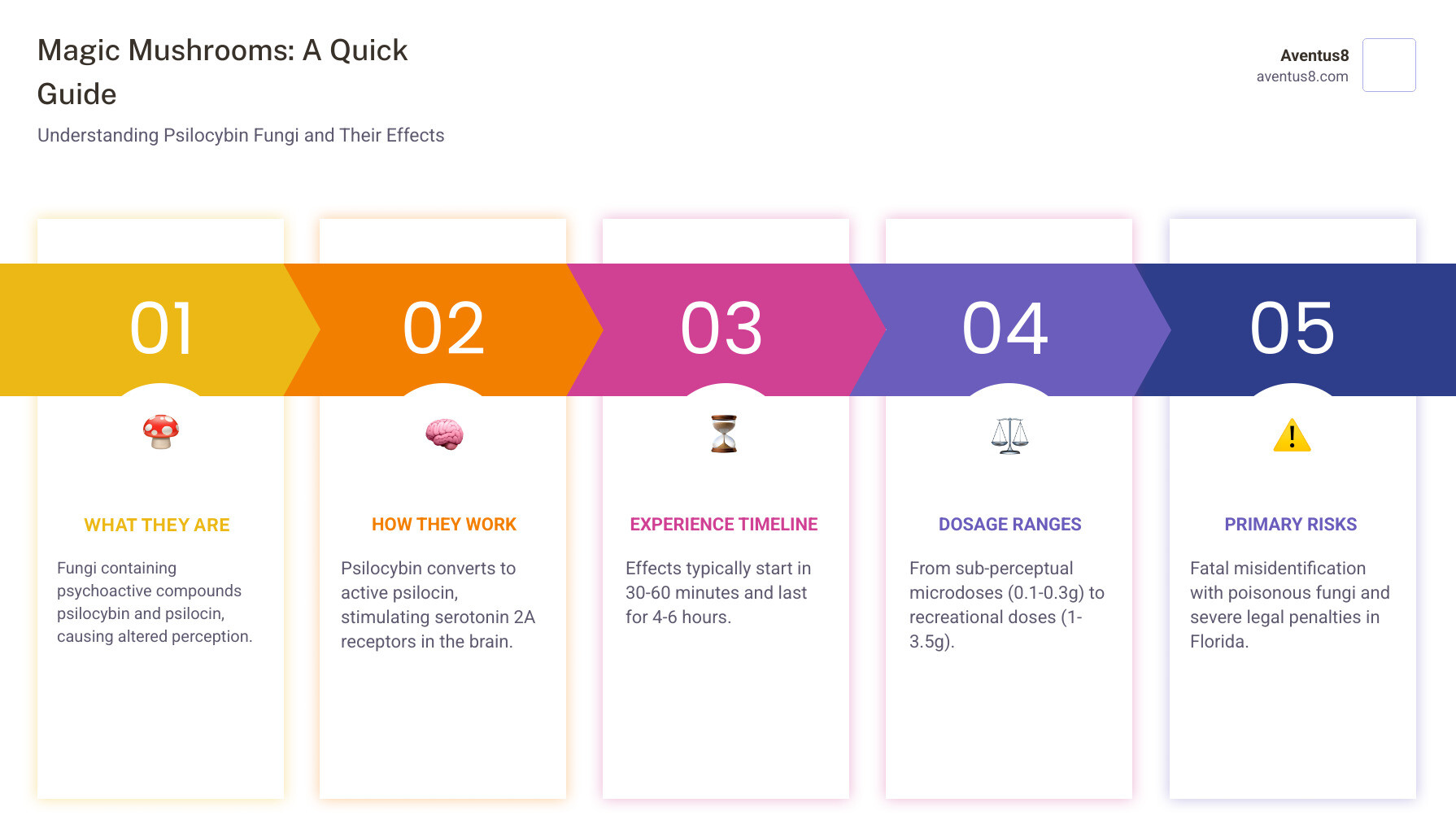
What are shrooms? Shrooms, also known as magic mushrooms or psilocybin mushrooms, are fungi that contain the naturally occurring psychoactive compounds psilocybin and psilocin. These substances cause hallucinations and alter a person's perception, emotions, and sense of reality.
Quick Facts:
- Active Compounds: Psilocybin (converts to psilocin in the body) and psilocin
- Common Names: Shrooms, magic mushrooms, mushies, golden tops, liberty caps
- Species Count: Over 200 species worldwide, primarily in the genus Psilocybe
- Effects Duration: Typically 4-6 hours
- Legal Status: Schedule I controlled substance in the United States and Florida
- Primary Risk: Confusion with poisonous mushrooms can be fatal
Psilocybin mushrooms have been used for thousands of years in spiritual and healing ceremonies, particularly in Central American cultures. Today, they exist in a complex space between illegal recreational use, emerging therapeutic research, and ongoing legal restrictions. While scientists are actively studying psilocybin's potential to treat depression, PTSD, and addiction, possession remains a serious felony in Florida.
The conversation around shrooms has shifted dramatically. Major research institutions are conducting FDA-approved studies, some cities have decriminalized possession, and public perception is evolving. However, significant risks remain—from misidentifying poisonous look-alikes to unpredictable psychological effects and serious legal consequences, especially here in Hollywood, FL.
As Max Shemesh, CEO of Aventus8, I've steerd the complex world of plant-based wellness for years. Understanding what shrooms are is part of a broader conversation about natural compounds. While psilocybin is illegal, my experience highlights the need for accurate, science-based information to help people make informed wellness decisions.
What Are Shrooms? A Deep Dive into Psychedelic Fungi
When people ask what are shrooms, they're curious about the fungi making headlines—often called "magic mushrooms," "mushies," or "golden tops." These aren't culinary mushrooms; they're a group of fungi with compounds that can fundamentally alter your perception of reality.
Here's something that surprises most people: there are over 200 species of psilocybin-containing mushrooms scattered across the globe. The genus Psilocybe is the most famous, with 116 different species, but you'll also find these compounds in other genera like Panaeolus, Copelandia, and Gymnopilus. Right here in Florida's subtropical climate, Psilocybe cubensis thrives in our humid forests—something Hollywood residents should be aware of, given the risks we'll discuss later.
These mushrooms have a distinctive appearance. They typically grow with long, slender stems topped by caps featuring dark gills underneath. If you handle them, you'll notice something unusual: they bruise blue. This blue discoloration happens when the active compounds oxidize upon contact, and it's one of the identifying characteristics people look for—though we strongly advise against foraging for reasons we'll cover in the safety section.
What are the active compounds in shrooms?
The magic behind shrooms comes from two main compounds: psilocybin and psilocin. These tryptamine alkaloids are responsible for the psychedelic experience.
Psilocybin is a "prodrug," meaning it's not psychoactive on its own. After ingestion, your body converts it into psilocin, the compound that creates the psychedelic effects. Think of psilocybin as the key and psilocin as what's on the other side.
Once psilocin enters your brain, it binds to serotonin 2A receptors (5-HT2A). This is the same receptor system your body's natural "feel-good" neurotransmitter, serotonin, uses. By activating these receptors, psilocin triggers profound changes in how your brain processes information, leading to altered perceptions, emotions, and consciousness.
A fascinating effect involves the brain's Default Mode Network (DMN), which is active during self-reflection and planning, creating your sense of self. Psilocin temporarily disrupts this network, reducing its activity. As a result, people often report feeling more open, creative, and connected, with the boundaries of "self" becoming less rigid.
The concentration of these compounds varies depending on the species and even individual mushrooms. Psilocybin typically makes up 0.5% to 1% of a dried mushroom's weight, though it can range from 0.03% to 1.78%. Psilocin is usually present in smaller amounts, from 0% to 0.59%. Interestingly, psilocin is about 1.4 times more potent than psilocybin, so even small amounts pack a punch.
Some species also contain other tryptamine alkaloids like baeocystin, norbaeocystin, and norpsilocin. These compounds may contribute to an "entourage effect," where they subtly modify the overall experience—similar to how different cannabinoids work together in cannabis.
How are magic mushrooms typically consumed?
People consume shrooms in several ways, depending on preference and desired effects. The mushrooms can be eaten fresh or dried, though drying is more common because it preserves them and makes dosing more consistent.
The most straightforward method is eating them directly. However, many find the taste bitter and unpleasant, so they often mix them with other foods. Some brew them into tea or soup, which can speed up the onset of effects—sometimes to within 5 to 10 minutes instead of the usual 30 to 60. Others chop them up for pizza, blend them into smoothies, or mix them with chocolate to mask the flavor.
For those seeking precision, especially with microdosing, powdering dried mushrooms into capsules has become popular. This method makes it much easier to control the dosage.
The effects you experience depend heavily on how much you consume. Microdosing involves taking very small amounts—typically 0.1 to 0.3 grams of dried mushrooms, about 5-10% of a recreational dose. The goal isn't to trip but to potentially experience subtle benefits like improved mood or creativity without hallucinogenic effects.
Recreational doses usually fall between 1.0 and 3.5 grams of dried mushrooms (or 10 to 50 grams fresh), corresponding to roughly 10 to 50 milligrams of psilocybin. For Psilocybe cubensis, the species common around Hollywood and throughout Florida, a typical dose is 1.0 to 2.5 grams.
Then there's what some call a "heroic dose"—anything above 5.0 grams dried. These high doses are known for inducing extremely intense, often ego-dissolving experiences that can be profound but also overwhelming for inexperienced users.
It's worth noting that potency can vary significantly not just between species but even between different strains of the same species. Some strains, like the "Penis Envy" variety of P. cubensis, are considered notably more potent than others, so the same weight can produce very different effects.
The Shroom Experience: Effects, Side Effects, and Influencing Factors
If you're wondering what are shrooms like to actually experience, the answer is both fascinating and complex. The truth is, no two journeys are quite the same. The experience is deeply personal, shaped by your unique brain chemistry, emotions, and circumstances.
After consuming shrooms, most people begin feeling effects within 30 to 60 minutes. If you've brewed them into tea, that timeline can shrink even more—sometimes as quickly as 5 to 10 minutes. Once the journey starts, expect to be along for the ride for about 4 to 6 hours, with the most intense effects typically peaking during the first 3 to 4 hours.

During this window, your perception of reality shifts in remarkable ways. Time becomes elastic—minutes stretch into what feels like hours, or entire hours compress into moments. Your sense of space can warp too, with distances seeming to expand or contract. Some users experience synesthesia, a fascinating crossing of sensory wires where you might "see" music as colors or "feel" sounds as physical sensations. It's your brain operating in a completely different mode than usual.
What are the immediate positive and negative effects of taking magic mushrooms?
When people take shrooms, they're stepping into unpredictable territory. The experience can swing from profoundly beautiful to deeply challenging, sometimes within the same trip.
On the positive side, many users report euphoria—a sense of joy that feels almost otherworldly. Spiritual or mystical experiences are common, with people describing feelings of oneness with nature, the universe, or something greater than themselves. These moments of interconnectedness can be genuinely transformative. Creativity often flourishes under psilocybin's influence, with thoughts flowing more freely and connections forming between ideas that seemed unrelated before. The experience frequently encourages deep introspection, allowing people to examine their lives, relationships, and emotions from fresh angles. And then there's the sensory improvement—colors become impossibly vivid, music takes on new dimensions, and even ordinary textures feel profound.
But here's where things get real: shrooms can also produce what's known as a "bad trip," and it's not something to take lightly. Anxiety and paranoia can creep in, making you feel watched, judged, or trapped. Some people experience overwhelming fear or panic, especially if the intensity catches them off guard. Confusion and disorientation are common when reality feels like it's slipping away. The visuals, while often beautiful, can sometimes turn disturbing or frightening, especially if you're already in a negative headspace.
Physical side effects add another layer of discomfort. Early in the experience, nausea and excessive yawning are fairly common. Your heart rate and blood pressure may increase, and your body temperature can rise. Muscle weakness, drowsiness, lack of coordination, and dilated pupils are also typical. Some people develop headaches hours after the experience ends.
The Challenging Experience Questionnaire has documented these difficult moments in detail, revealing that while challenging experiences can sometimes lead to personal growth later, they're often genuinely distressing in the moment. This isn't just "feeling a little uncomfortable"—it can be psychologically intense.
How do dosage, mood, and environment influence the experience?
Understanding what are shrooms going to do to you requires looking at three critical factors that shape every journey: your mindset, your environment, and how much you take. In psychedelic circles, we call the first two "set and setting," and they're absolutely crucial.
Set—your mindset—is your internal landscape going into the experience. Your mood, expectations, personality, and current mental health all play starring roles. If you're already feeling anxious, stressed, or dealing with unresolved emotional issues, those feelings can amplify dramatically during a trip. Psilocybin tends to turn up the volume on whatever's already playing in your mind. Approaching the experience with a calm, open, and positive mindset significantly improves your chances of a meaningful journey rather than a frightening one.
Setting—your environment—matters just as much. The physical space, the people around you, and the overall atmosphere create the container for your experience. A safe, comfortable, familiar place with trusted friends creates a foundation of security. Here in Hollywood, FL, that might mean a quiet room in your home with soft lighting and calming music, rather than, say, a crowded beach or unfamiliar location. A chaotic, unpredictable, or unfamiliar setting can trigger anxiety and paranoia, turning what could have been a positive experience into a challenging one.
Dosage is the third pillar. A microdose (0.1-0.3g) aims to stay below the threshold of noticeable effects, potentially enhancing mood or creativity without hallucinations. A recreational dose (1-3.5g) will absolutely produce full psychedelic effects—visuals, altered thinking, emotional shifts, the works. And a "heroic dose" (5g or more) launches you into extremely intense territory, often dissolving your sense of self entirely. These high doses dramatically increase the likelihood of overwhelming experiences.
It's also worth noting that potency varies wildly. Different species contain different concentrations of psilocybin, and even within the same species, individual mushrooms can vary. Some strains, like the notorious Penis Envy variety of Psilocybe cubensis, pack considerably more punch than typical specimens. This variability makes precise dosing difficult, which is yet another risk factor when considering what are shrooms capable of producing.
Risks, Legality, and Safety in Hollywood, FL
Let's talk about the serious side of what are shrooms mean for you here in Hollywood, FL. While research into therapeutic benefits is exciting and the psychedelic experience itself can be profound, we need to have an honest conversation about the real risks and legal consequences you face right here in our community.
One concern that doesn't get enough attention is Hallucinogen Persisting Perception Disorder, or HPPD. Some people call these "flashbacks." Imagine experiencing spontaneous visual disturbances or emotional shifts days, months, or even years after your last use. These episodes can pop up when you're stressed, tired, or using other substances. While it's relatively rare, it's a reality that some users face long after they thought their psychedelic days were behind them.
There's also a heightened risk of psychosis for people who are already predisposed to mental health conditions. High doses can trigger serious psychological episodes in vulnerable individuals, turning what might have been a spiritual journey into a mental health crisis.
On a physiological note, your body develops tolerance to psilocybin remarkably quickly. If you use shrooms frequently, you'll need increasingly higher doses to achieve the same effects. The good news? This tolerance typically fades after about a week of not using. Even better news: psilocybin mushrooms don't cause physical or psychological dependence the way many other substances do. You won't experience severe physical withdrawal symptoms, which sets them apart from truly addictive drugs.
What are the risks of misidentifying magic mushrooms in South Florida?
Here's where things get genuinely frightening, especially for anyone thinking about foraging in South Florida's lush landscape. The biggest danger with shrooms isn't always the psychedelic compound itself—it's the terrifying possibility of picking the wrong mushroom entirely.
Florida's warm, humid climate creates the perfect breeding ground for hundreds of mushroom species. Many poisonous varieties look almost identical to psilocybin-containing mushrooms. We're talking about toxic fungi that can cause severe illness, permanent organ damage, or death. This isn't an exaggeration or scare tactic—it's a medical reality that emergency rooms in Broward County deal with every year.
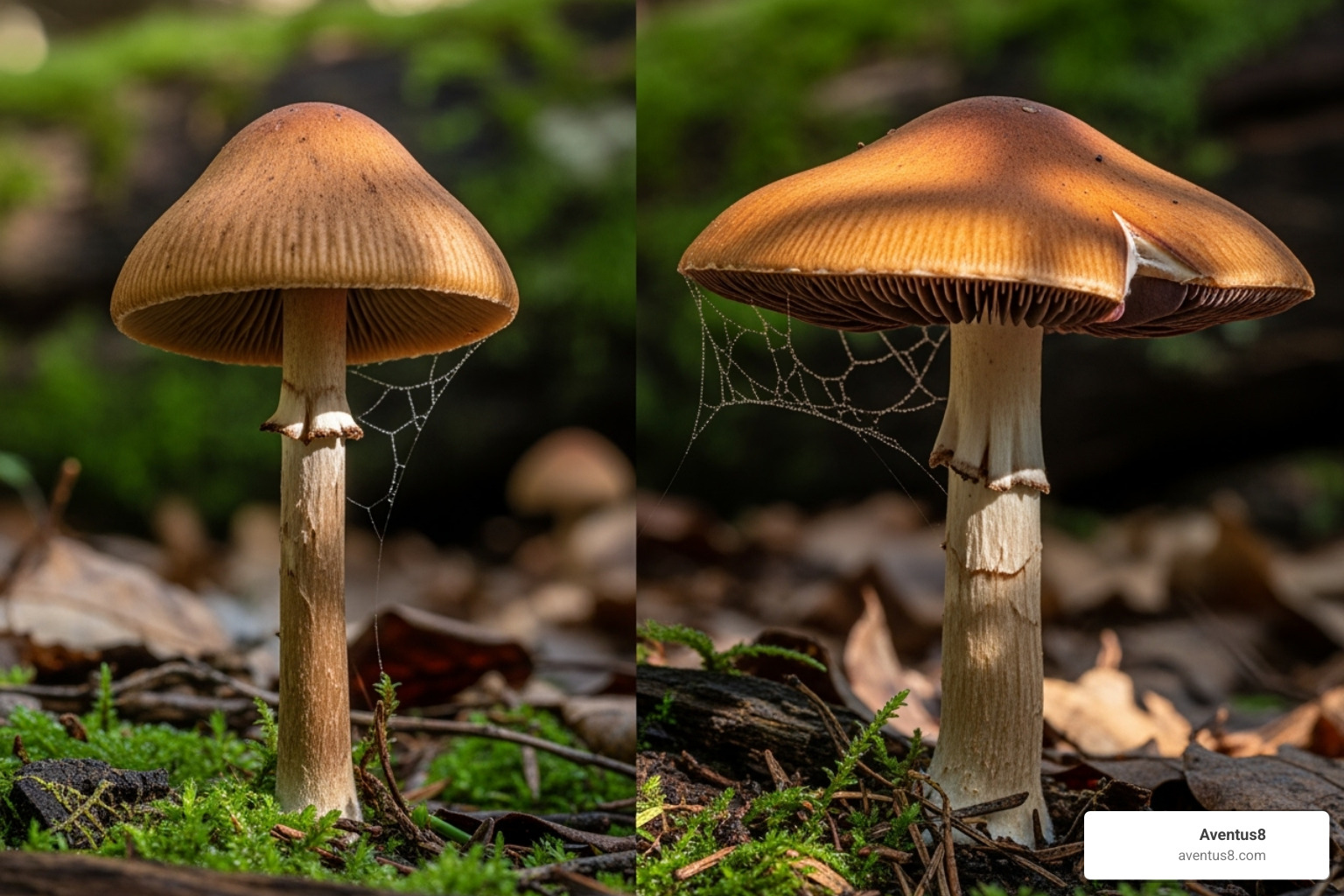
Unless you're a trained mycologist with years of experience identifying fungi in Florida's specific ecosystem, foraging for wild mushrooms is essentially playing Russian roulette with your liver and kidneys. Even experienced foragers make mistakes. If you're not absolutely, 100% certain of a mushroom's identity, don't consume it. Period.
The Better Health Channel provides guidance on poisonous fungi that highlights just how dangerous misidentification can be. Beyond foraging risks, there's also the black market problem. Commercial products sold illegally and marketed as containing psilocybin have been found to contain toxic chemicals instead. You simply can't know what you're getting when you're operating outside legal channels.
What are the legal implications of possessing shrooms in Hollywood, FL?
Now for the hard truth about what possessing shrooms means legally right here in Hollywood, FL. Despite the exciting research happening at major universities and decriminalization efforts you might be reading about in other parts of the country, Florida hasn't budged on this issue.
Psilocybin is classified as a Schedule I controlled substance under both the federal Controlled Substances Act and Florida State Law. This classification puts it in the same category as heroin, meaning lawmakers consider it to have high potential for abuse and no accepted medical use—even though ongoing research is actively challenging that second point.
For those of us living in Hollywood and throughout Broward County, the consequences are serious and immediate. Possession, cultivation, or distribution of psilocybin mushrooms can result in felony charges. We're talking about potential prison time, substantial fines, and a permanent criminal record that can affect your employment, housing, and education opportunities for the rest of your life.
Unlike Denver, Colorado, or Oregon, which have taken steps toward decriminalization or legalized therapeutic use, Hollywood and Broward County have no such protections in place. There are no local ordinances softening the blow, no city council resolutions deprioritizing enforcement. Law enforcement here treats psilocybin possession as the serious felony that Florida law defines it to be.
Even possessing spores can be legally complicated. While some states allow spore possession for microscopy purposes, Florida law enforcement may view it differently if they believe you intend to cultivate. The legal risk simply isn't worth it under current Hollywood, FL laws.
As someone who's spent years in the plant-based wellness space here in South Florida, I understand the frustration when you hear about therapeutic potential but face these legal barriers. The landscape is changing, but it hasn't changed here yet. Until it does, the legal reality in our community demands serious consideration.
The Future of Psilocybin: Therapeutic Research and Support
Despite the serious legal consequences we've outlined for Hollywood, FL, there's an exciting shift happening in the scientific world around what are shrooms and their potential medical applications. Major research institutions, including the Johns Hopkins Center for Psychedelic and Consciousness Research, are conducting rigorous studies on psilocybin's therapeutic potential. Even government agencies like the National Institute on Drug Abuse (NIDA) are funding this research, which represents a significant departure from decades of prohibition-focused policies.
The momentum is real. The FDA has granted "Breakthrough Therapy" designation to psilocybin-assisted therapy for major depressive disorder, a classification reserved for treatments that show substantial promise in addressing serious conditions where few good options exist. This doesn't mean psilocybin is legal or approved yet, but it does signal that the medical establishment is taking its potential seriously.
What potential medical benefits are being researched?
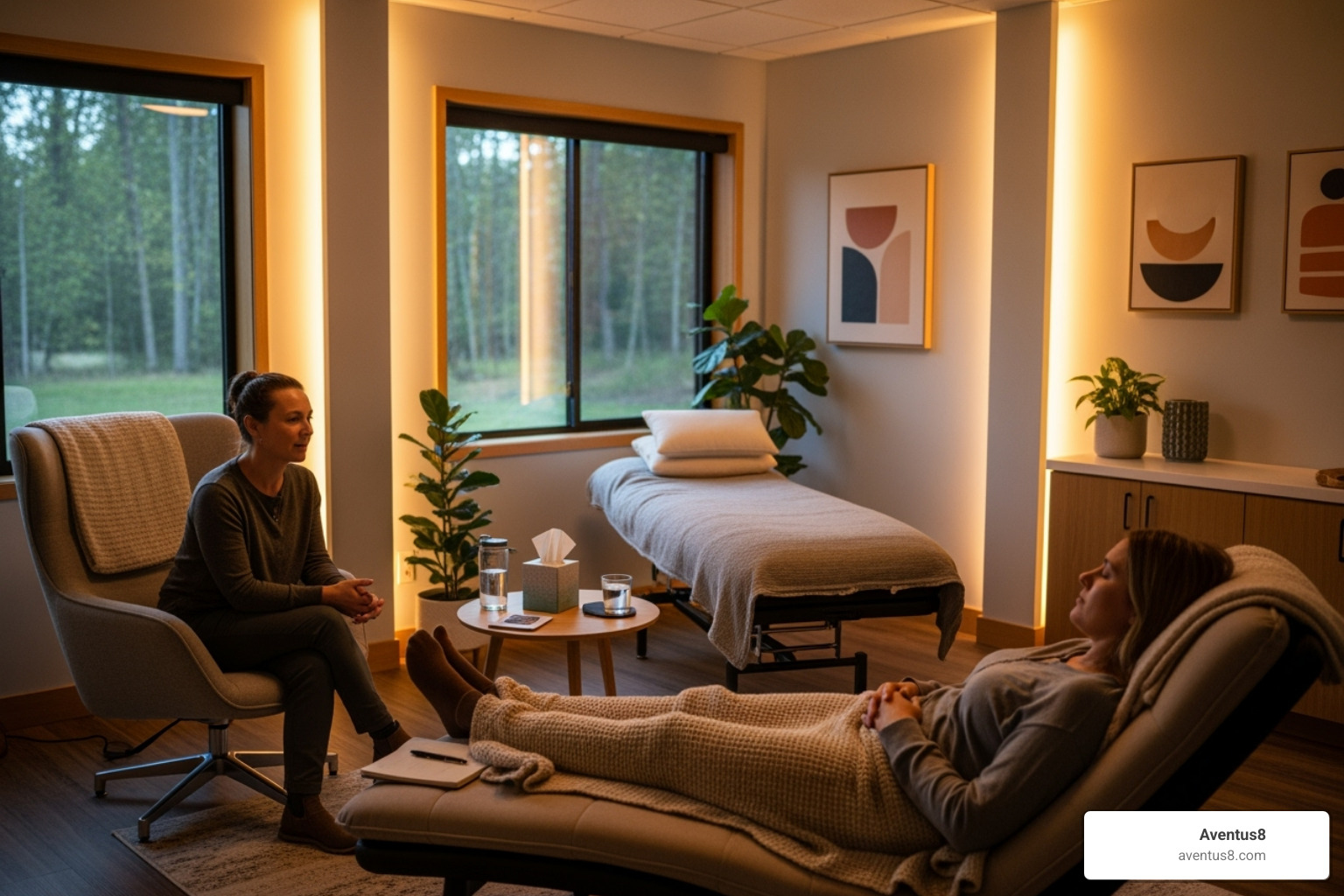
The research into psilocybin's medical applications spans a remarkable range of mental health challenges. Scientists are finding that when administered in controlled clinical settings with proper psychological support, shrooms may offer hope where traditional treatments have fallen short.
Treatment-resistant depression is one of the most promising areas of research. Studies have shown that psilocybin can produce rapid and sustained reductions in depressive symptoms, sometimes after just one or two supervised sessions. For people who've tried multiple antidepressants without success, this represents a potentially life-changing option.
End-of-life anxiety in cancer patients is another area where psilocybin has shown remarkable results. Clinical trials have found that a single psilocybin session, combined with therapy, can significantly reduce anxiety and depression in individuals facing terminal diagnoses. Many participants report profound spiritual experiences that help them find peace and acceptance.
Researchers are also exploring psilocybin's effectiveness for smoking cessation. The research on this topic has shown promising results, with some studies reporting abstinence rates significantly higher than traditional cessation methods. The psychedelic experience seems to help people gain new perspectives on their relationship with tobacco and strengthen their motivation to quit.
Alcohol use disorder is another target for psilocybin research. Clinical trials are investigating whether psilocybin-assisted therapy can help reduce heavy drinking days and support long-term sobriety. Early results suggest it may help individuals break free from deeply ingrained patterns of alcohol use.
Other conditions under investigation include PTSD, where psilocybin might help individuals process traumatic memories in new ways, and obsessive-compulsive disorder (OCD), where it could potentially interrupt repetitive thought patterns. Some researchers are even exploring its use for cluster headaches, with anecdotal reports suggesting relief from these notoriously painful episodes.
These studies happen in carefully controlled environments with trained therapists, medical supervision, and extensive screening. This isn't about recreational use—it's about developing safe, effective medical treatments that could one day be prescribed by doctors.
Where can individuals in the Hollywood area find help?
While the research is promising, the reality for residents of Hollywood, FL is that psilocybin remains illegal, and self-medicating with shrooms carries serious risks. If you or someone you know is struggling with substance use—whether it's psilocybin or any other substance—professional help is available and crucial.
Signs of problematic use can include continued use despite negative consequences, using substances to cope with daily stress or mental health issues, or experiencing distressing effects that linger after use. Even though psilocybin isn't considered physically addictive, psychological patterns of misuse can develop, and underlying mental health conditions can be worsened rather than helped by unsupervised psychedelic use.
For anyone in the Hollywood area who needs support, the SAMHSA National Helpline at 1-800-662-HELP (4357) provides free, confidential, 24/7 information and referrals for mental health and substance use services. This resource can connect you with local treatment providers and support groups.
Broward County behavioral health services also offer various programs for residents dealing with substance use or mental health challenges. Your primary care physician can provide referrals, or you can contact Broward County's health department directly for information about available services. If someone is experiencing a severe psychological crisis or "bad trip" that feels unmanageable, don't hesitate to call 911 or go to the nearest emergency room.
The gap between promising research and legal reality creates a difficult situation. While scientists are finding genuine therapeutic potential in psilocybin, accessing it safely and legally remains out of reach for most people. We strongly advocate for professional mental health support rather than self-medication with illegal substances. The risks—both legal and health-related—are simply too significant, especially here in Hollywood where the legal consequences remain severe.
As we await potential changes in legislation and the possible approval of psilocybin-assisted therapy, the best path forward is working with licensed healthcare providers who can offer evidence-based, legal treatment options for depression, anxiety, addiction, and other conditions.
Conclusion
We've taken quite a journey together exploring what are shrooms—these fascinating psychedelic fungi that have captivated human curiosity for thousands of years. We've learned that they're not just one type of mushroom, but over 200 species containing the powerful compounds psilocybin and psilocin. We've walked through how people consume them, from brewing teas to careful microdosing, and we've examined the profound and sometimes challenging experiences they can create.
The effects of shrooms can range from beautiful moments of spiritual connection and creative insight to difficult experiences filled with anxiety and confusion. As we discussed, your mindset going in and the environment you're in play enormous roles in shaping that journey. A comfortable setting with trusted people can make all the difference between a meaningful experience and a frightening one.
What's particularly exciting is the scientific renaissance happening around psilocybin. Researchers at prestigious institutions are uncovering its potential to help people struggling with treatment-resistant depression, end-of-life anxiety, PTSD, and addiction. The FDA has even granted it "Breakthrough Therapy" designation, recognizing that this ancient compound might hold answers for some of our most challenging mental health conditions.
But here's where we need to be completely honest with you, especially here in Hollywood, FL: despite this promising research, shrooms remain illegal. Psilocybin is a Schedule I controlled substance under both federal and Florida state law. Possession, cultivation, or distribution can result in serious felony charges right here in Broward County. There are no local decriminalization measures to protect you, and the legal consequences are real and severe.
Beyond the legal risks, we cannot stress enough the danger of misidentifying mushrooms in the wild. Florida's warm, humid climate hosts many mushroom species—some psychedelic, many poisonous. Confusing a toxic mushroom for a psilocybin-containing one can lead to organ failure or death. This isn't a risk worth taking, no matter how knowledgeable you think you are.
At Aventus8, we're passionate about helping people explore plant-based wellness options, but only within legal boundaries. We understand the desire to find natural compounds that support mental and physical well-being. That's why we've built our business around providing high-quality, legal cannabis products that you can trust. For those of you exploring natural wellness alternatives in Hollywood and throughout Florida, we offer a range of premium options with free shipping and a free gift on orders over $75—no medical card required.
The future of psilocybin therapy looks bright, and we're hopeful that research will continue to open new pathways for legal, supervised therapeutic use. Until that day comes, we're here to support your wellness journey with safe, legal, and accessible alternatives.


