

Amanita Muscaria vs Psilocybin: Understanding the Different High
What Are Amanita Muscaria Psychedelic Effects? (And How Do They Compare to Magic Mushrooms?)

Amanita muscaria psychedelic effects are unlike anything produced by classic magic mushrooms — and understanding that difference could matter a lot for your wellness choices.
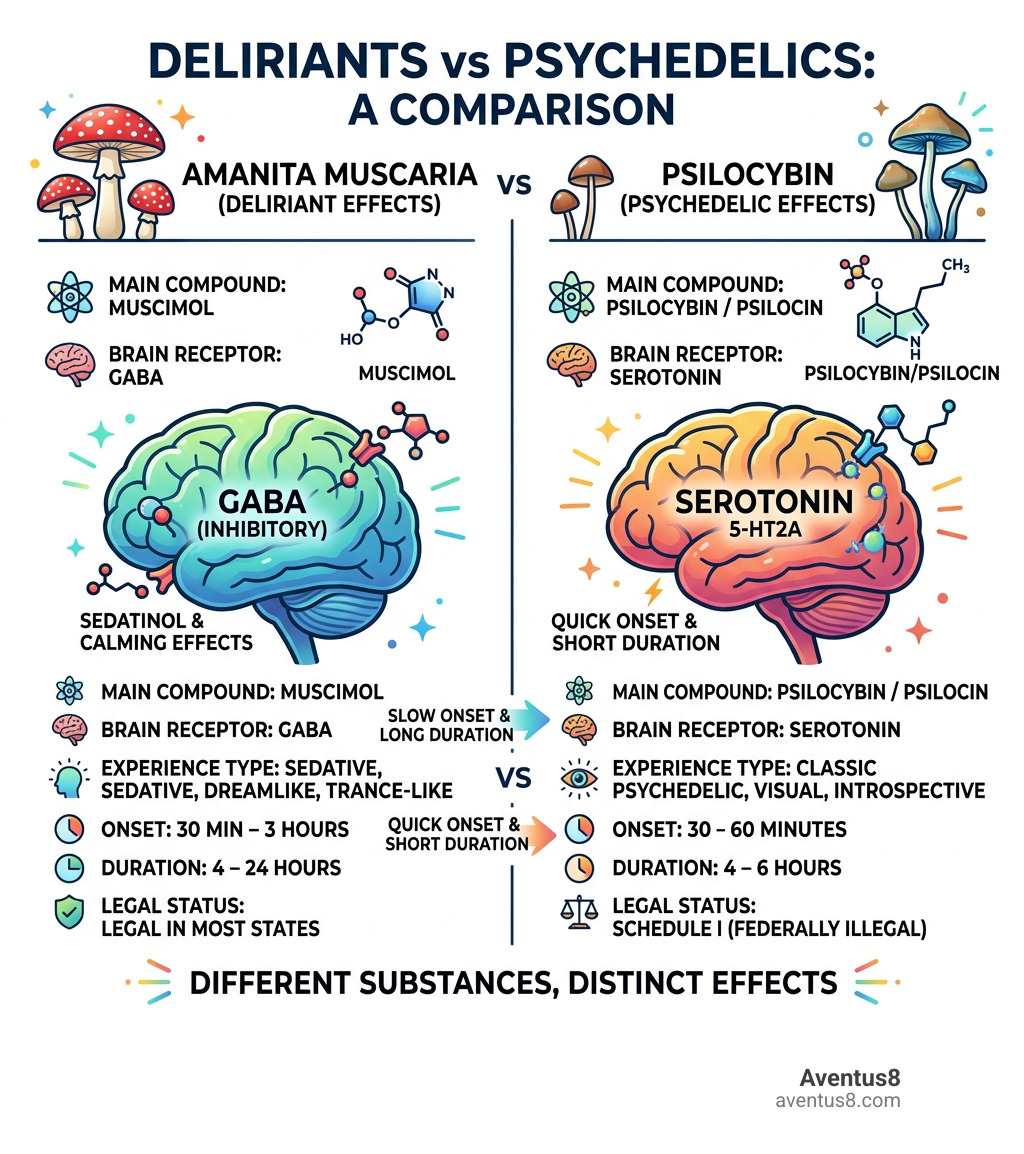
Here's a quick breakdown:
| Effect | Amanita muscaria | Psilocybin (Magic Mushrooms) |
|---|---|---|
| Main compound | Muscimol | Psilocybin / Psilocin |
| Brain receptor | GABA (inhibitory) | Serotonin 5-HT2A |
| Experience type | Sedative, dreamlike, deliriant | Classic psychedelic, visual, introspective |
| Onset | 30 min – 3 hours | 30 – 60 minutes |
| Duration | 4 – 24 hours | 4 – 6 hours |
| Legal status (US) | Legal in most states | Schedule I (federally illegal) |
The iconic red-capped, white-spotted mushroom has appeared in fairy tales, video games, and ancient shamanic rituals for thousands of years. But behind that familiar image is a complex and often misunderstood substance — one that is seeing a surge in mainstream interest. Google searches for Amanita muscaria rose nearly 200% in 2024 alone.
It is not a traditional psychedelic. It does not contain psilocybin. Its effects are closer to a sedative trance than a classic "trip" — and its potency can vary wildly depending on how it is prepared, when it was harvested, and how much is consumed.
This guide breaks all of that down in plain language.
I'm Max Shemesh, CEO and founder of Aventus8, and my deep experience in the legal hemp and cannabinoid industry has given me a front-row seat to the growing conversation around natural psychoactive compounds — including amanita muscaria psychedelic effects and how they fit into modern wellness. As interest in legal, accessible alternatives continues to grow from the Hollywood Broadwalk to the local wellness boutiques along Harrison Street here in Hollywood, FL, I want to make sure you have accurate, trustworthy information to guide your choices.
The Science of Amanita Muscaria Psychedelic Effects
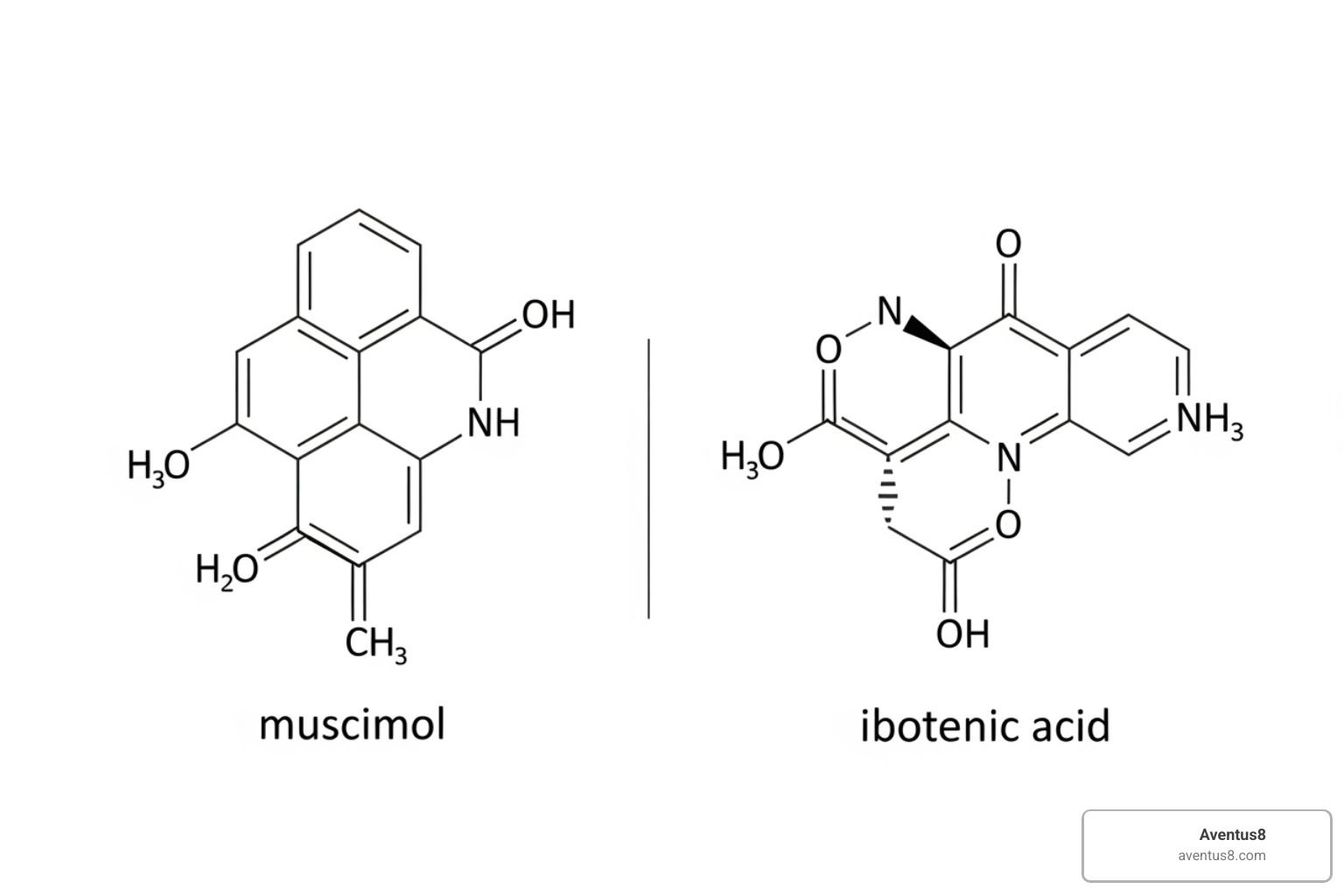
To understand the amanita muscaria psychedelic effects, we have to look at the chemistry under the cap. Unlike "magic mushrooms," which rely on psilocybin, the Fly Agaric operates through two primary compounds: muscimol and ibotenic acid.
When you consume Amanita muscaria, you aren't just taking one drug; you are engaging with a cocktail of substances that affect the brain in opposite ways. Muscimol is the "star of the show" for those seeking a psychoactive experience. It is a potent agonist for GABAa receptors, meaning it mimics the brain’s primary inhibitory neurotransmitter. This makes it a central nervous system (CNS) depressant, leading to a state that is often described as sedative-hypnotic.
Ibotenic acid, on the other hand, is a prodrug found in the fresh mushroom. It interacts with glutamate receptors, which are excitatory. This is why raw Amanita often causes agitation, muscle twitches, and confusion before the "dreamlike" state kicks in. Through a process called decarboxylation (usually achieved by drying or boiling), ibotenic acid converts into muscimol. Scientific research on muscimol compounds suggests that muscimol is roughly ten times more potent than ibotenic acid, which is why proper preparation is so critical for a consistent experience.
An active dose for an adult is generally cited as approximately 6 mg of muscimol or 30 to 60 mg of ibotenic acid. In the wild, this is typically the amount found in a single mushroom cap, though potency varies wildly. Here in Hollywood, FL, from the quiet residential streets of Emerald Hills to the bustling downtown core, we’ve seen a massive spike in research interest as people look for natural ways to navigate stress and sleep.
Understanding the GABAergic Pathway
The reason the amanita muscaria psychedelic effects feel so "heavy" or "dreamlike" is due to the GABAergic pathway. While traditional psychedelics like LSD or psilocybin "turn up the volume" on certain brain connections, muscimol acts more like a dimmer switch for the central nervous system.
By binding to GABAa receptors, muscimol inhibits neurotransmission. This leads to the characteristic sedation and dissociation. According to more info on muscimol as a GABA agonist, this pathway is what separates Amanita from the "mind-manifesting" visuals of serotonin-based drugs. Instead of seeing geometric patterns with your eyes open, you are more likely to experience vivid, lucid dreams or a sense of being in a "waking trance."
Stimulating vs Sedative Compounds
The balance between stimulation and sedation depends entirely on the ratio of ibotenic acid to muscimol. If a mushroom is consumed raw or under-processed, the ibotenic acid can cause euphoria mixed with intense agitation and physical discomfort.
This is a "biphasic" effect: a period of stimulation followed by deep sedation. Interestingly, research on monoamines and muscimol shows how these principles interact with brain chemistry to produce these unique shifts. It’s also worth noting that while the mushroom is named after "muscarine," it actually contains very little of that compound — not enough to cause the primary psychoactive effects, though it can contribute to minor side effects like sweating or salivation.
Amanita Muscaria vs. Psilocybin: Comparing the Experience
If you walk into a wellness space in Hollywood, FL, or chat with practitioners in the South Florida holistic scene, you might hear people use "shrooms" as a catch-all term. However, the experience of amanita muscaria psychedelic effects is a world away from a psilocybin trip.
Psilocybin targets the 5-HT2A serotonin receptors. This creates the "classic" psychedelic experience: vibrant colors, geometric fractals, and deep emotional introspection. Clinical studies on psilocybin for depression have shown it can help "reset" brain patterns, which is why it’s gaining breakthrough therapy status.
Amanita is technically classified as a "deliriant" or a "sedative-hypnotic" rather than a psychedelic. It doesn't usually produce the same "oneness with the universe" feeling. Instead, it feels more like a deep, ethereal intoxication.
Why Amanita muscaria psychedelic effects differ from Magic Mushrooms
The fundamental difference is the lack of psilocybin. Because Amanita works on GABA receptors (the same ones affected by alcohol or benzodiazepines), the "high" is physical and sedative. You won't find the typical "sparkle" or high-energy "giggles" associated with psilocybin.
According to more info on the "Mario" mushroom, many users report auditory changes — like a low humming or echoing — and a sense of "looping" where time feels distorted. It’s a "heavier" experience that often ends in a very deep sleep.
The "Trip" vs. The "Dream"
While a psilocybin trip is often an externalized experience of the world, an Amanita experience is often internalized. Many users report "lucid dreaming" while still partially awake. You might experience synesthesia (smelling colors or seeing sounds), but it happens within a foggy, trance-like state.
Historically, this was used for soul-searching and religious trances. We see this reflected in Siberian shamanic art, where the mushroom is depicted as a bridge between the physical world and the spirit world. In modern Hollywood, FL, this has translated into a "cultural renaissance" within our local community, where people use Amanita specifically for its introspective, dream-enhancing qualities.
Safety, Toxicity, and Identification in Hollywood, FL
We have to be clear: Amanita muscaria is classified as a poisonous mushroom. However, the term "poisonous" in mycology can be a bit of a sliding scale. While it can certainly make you very sick if mishandled, case reports on fly agaric poisoning show that fatalities are incredibly rare in healthy adults who receive modern medical care.
The primary risks are nausea, vomiting, muscle twitching, and "temporary insanity" (intense delirium). The North American Mycological Association (NAMA) has noted that there have been no reliably documented deaths from Fly Agaric toxins in the last 100 years. That said, a "fatal dose" is theoretically cited as about 15 caps, but since the size and potency of caps vary, this is a dangerous metric to rely on.
Managing the risks of Amanita muscaria psychedelic effects
If someone consumes too much and experiences severe symptoms, the standard medical response is supportive care. This usually involves keeping the person in a quiet, dark room to prevent "bad trips" and administering IV fluids.
In some cases, medical professionals might use activated charcoal or even consider a position paper on gastric lavage if the ingestion was very recent. Benzodiazepines are sometimes used to manage extreme agitation. If you are in Hollywood, FL and suspect a poisoning, your first call should always be to emergency services or local poison control.
Accurate Identification and Lookalikes
Foraging in Florida is tricky, especially in the unique ecosystems surrounding Hollywood, FL. While Amanita muscaria is iconic with its red cap and white warts, it has many relatives. In our local South Florida pine flatwoods and shaded park areas, you must be able to distinguish it from:
- Amanita pantherina: Brown cap, much higher ibotenic acid content, and significantly more potent/toxic.
- Amanita flavoconia: Smaller, yellow-orange cap, and often confused by beginners.
- Deadly Amanitas: Species like A. bisporigera (Destroying Angel) or A. phalloides (Death Cap) contain amatoxins that cause liver failure. These do not have the red/orange cap of the Fly Agaric.
For a deep dive into these differences, we recommend checking out a professional guide to Amanita species.
Cultural History and Modern Legal Status
The Fly Agaric is arguably the most famous mushroom in history. It is the "Soma" of the ancient Indo-Aryans, the strength behind the Viking "Berserkers," and the inspiration for the red-and-white aesthetic of Santa Claus.
The Santa connection is particularly fun: Siberian shamans would collect these mushrooms, dry them in trees (like ornaments), and then deliver them to yurts through the smoke hole (the chimney) because the doors were blocked by snow. Even the flying reindeer myth likely comes from reindeer eating the mushrooms and acting "high." This rich history is explored in ethnobotanical perspectives on Berserkers.
Legal Scrutiny of Amanita muscaria psychedelic effects
Despite its psychoactive power, Amanita muscaria is federally legal in the United States. It is not listed under the Controlled Substances Act because it does not contain psilocybin. However, it is facing increasing public health response research due to the rise of unregulated gummies and extracts.
The FDA recently issued FDA updates on Amanita in food, warning that these compounds are not approved as food additives or dietary supplements. Currently, Louisiana is the only state with a specific ban on the mushroom (except for ornamental purposes). In Hollywood, FL, and the rest of Florida, it remains legal to possess, though the market is under heavy regulatory scrutiny. Local enthusiasts in the Broward County area often look for lab-tested options to avoid the unpredictability of wild-harvested specimens.
Traditional Preparation and Potency Factors
Potency is the biggest wild card. Spring and summer mushrooms have been reported to contain up to 10 times more ibotenic acid and muscimol than those harvested in the autumn.
Traditional preparation is designed to reduce toxicity. Many cultures, such as those in traditional Slovenian recipes, boil the mushrooms in large amounts of water and discard the liquid to remove the water-soluble toxins, making the mushroom edible as food. For psychoactive use, drying at specific temperatures (around 145°F) is the standard method to convert ibotenic acid into muscimol without destroying the active compounds.
Frequently Asked Questions about Amanita Muscaria
Is Amanita muscaria deadly to humans?
While often labeled "deadly" in older field guides, modern records from the North American Mycological Association show that deaths are exceptionally rare. Most "poisonings" result in a few hours of nausea or deep sleep. However, the risk of misidentification with actually deadly mushrooms (like the Death Cap) is the real danger. You can find more on mushroom poisoning syndromes to understand the symptoms.
How does the Amanita high feel compared to psilocybin?
Think of psilocybin as a "bright," colorful, and energetic "trip." Think of Amanita as a "heavy," dreamlike, and sedative "trance." One works on serotonin (mood/perception), while the other works on GABA (relaxation/inhibition).
Is it legal to buy Amanita muscaria in Hollywood, FL?
Yes. Florida does not currently have laws prohibiting the possession or sale of Amanita muscaria. However, because of the Business Insider report on legal psychedelics, there is a lot of talk about future regulation. At Aventus8, we stay on top of these laws to ensure everything we offer is fully compliant.
Conclusion
The world of amanita muscaria psychedelic effects is fascinating, but it requires a level of respect and education that traditional "magic mushrooms" often don't demand. From its GABAergic science to its roots in Siberian shamanism, the Fly Agaric offers a unique window into a different kind of altered state — one defined by dreams rather than "trips."
At Aventus8, we are proud to be a part of the Hollywood, FL community, serving neighbors from Young Circle to the beach. We believe in providing high-quality, lab-tested products that help you explore the potential of natural compounds safely and legally. Whether you're interested in the latest wellness trends or looking for a trusted source for cannabis products, we’ve got you covered.
We offer free shipping and a free gift on all orders over $75 within the U.S., and no medical card is ever required.
Shop high-quality products at Aventus8 and see why we're Hollywood's favorite destination for legal psychoactives.


%0A%0AAmanita%20muscaria%20psychedelic%20effects%20are%20unlike%20anything%20produced%20by%20classic%20magic%20mushrooms%20%E2%80%94%20and%20unde...)